
Home › Blog › Self-Adhesive Smart Film vs Laminated Smart Glass
Smart Film · Buyer's Guide
Self-Adhesive Smart Film vs Laminated Smart Glass: Retrofit or Replace?
Both use the same switchable PDLC layer. What changes is how that layer is protected, and that decides whether you can keep the glass you already have or need new panes.
For dry, interior glass, self-adhesive smart film performs as well as laminated smart glass. Both use the same PDLC switching technology, but the film bonds to the glass you already have and is normally installed without removing a single pane. Laminated smart glass seals the film between two sheets of glass, which makes it the better choice for showers and bathrooms, glass exposed to weather or water, and projects where the glazing is being replaced anyway. Retrofit when the glass is sound, dry and staying. Replace when the film would face moisture or the glass is coming out regardless.
Most villas, offices and clinics in Saudi Arabia that ask about switchable privacy are already fully glazed. The partitions are up, the windows are sealed, and nobody wants to take them out. So the retrofit or replace decision usually matters more than the technology itself.
If you want the physics first, our explainer on how switchable glass turns from frosted to clear covers what happens inside the film when the power comes on. This guide is about the practical choice.
Same Switching Technology, Different Protection
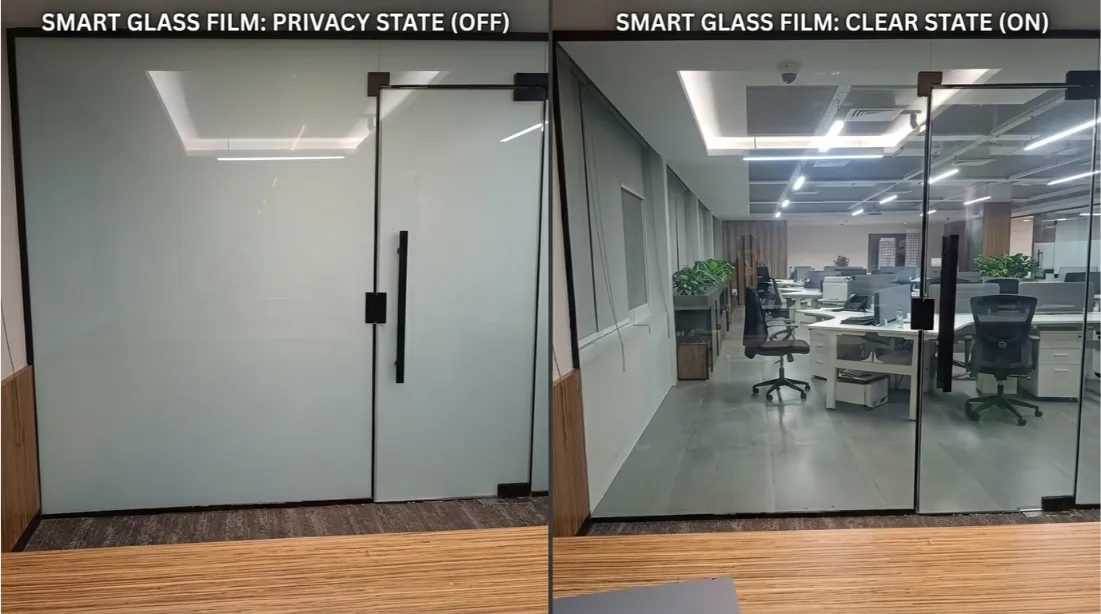
Both products rely on a polymer dispersed liquid crystal (PDLC) layer held between two thin conductive sheets. With the power off, the liquid crystal droplets scatter light and the glass looks frosted. With the power on, they line up and the glass turns clear. That part is identical in both formats.
Self-adhesive smart film
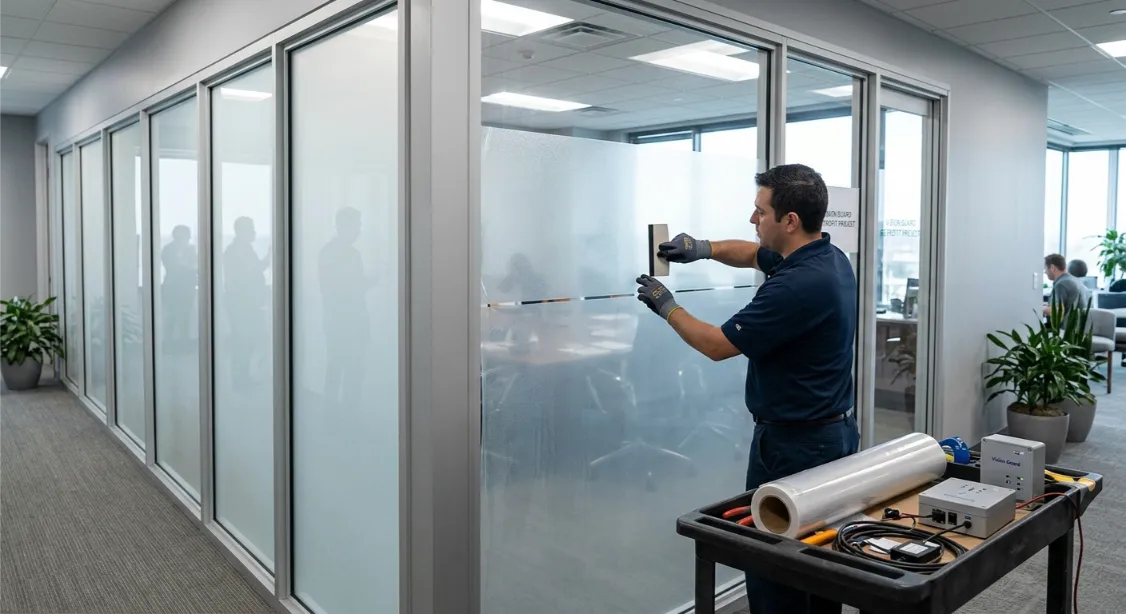
Cut to each pane on site, applied to the room-side face and wired at the edge to a transformer or controller.
Laminated smart glass
Made in a factory under heat and pressure, then delivered and glazed into the frame as a new pane.
With adhesive film, you are adding a layer to glass that stays in place. With laminated smart glass, you are buying a new glass unit with the film already locked inside it. For a fuller introduction to the product itself, see our complete guide to smart film.
Key point
Neither format switches better than the other. The real difference is exposure: laminated glass shields the film's edges and surfaces from water, cleaning and impact, while adhesive film depends on staying in a dry, interior position.
Retrofit Film or Laminated Glass: Side by Side
| Factor | Self-adhesive smart film | Laminated smart glass |
|---|---|---|
| Existing glass | Kept; film is applied to it | Replaced with new panes |
| Installation | On site, pane by pane, usually with the glass left in its frame | Glass made to size, then glazed into the frame |
| Disruption | Low; no demolition | Higher; old panes removed, frames may need adjusting |
| Lead time | Short; film is cut for each pane | Longer; each pane is made to order |
| Showers and wet areas | Not recommended | Suitable; film is sealed inside |
| Glass exposed to weather | Inside face only | Protected within the pane |
| Breakage behaviour | Depends on the base glass; not a certified safety product | Laminated pane holds together when broken |
| If the film fails later | Film replaced; glass stays | Whole pane replaced |
| Typical cost | Usually lower; no new glass is made | Usually higher; includes glass, fabrication and glazing |
Both are priced per square metre, and the final figure depends on glass area, the number and size of panes, and the control system. A site measurement is the only reliable way to compare the two for a specific project.
When Self-Adhesive Smart Film Is Enough
Retrofit film is the practical choice when all four of these hold true:
- The film will sit on the room-side face of the glass, indoors.
- The surface stays dry in normal use, away from showers, sinks and pool splash.
- The glass is flat and sound, with no chips, cracks or failed seals.
- A cable can run from the edge of each pane to a power point without major works.
That describes a large share of real requests: glass meeting rooms and office partitions, clinic consultation rooms, street-facing villa windows, majlis glass and interior glass doors. Keeping the glass means no glazier, no waiting for fabricated panes, and far less mess in an occupied home or office.
Our smart film installation service covers this kind of retrofit work, from measuring each pane to fitting the switch or remote control.
When Laminated Smart Glass Is the Honest Answer
Retrofit film is not always the right recommendation, and an installer should tell you when it isn't.
Showers and bathrooms
Steam and splash water reach the exposed edges of adhesive film, which is exactly where the conductive layers sit. Moisture getting in there can make the film lose clarity or stop switching altogether. For a shower screen, laminated smart glass is the correct product. If the bathroom only ever needs to be private and never clear, a fixed frosted glass sticker on the dry side of the glass does the job without any wiring.
Glass exposed to the weather
Adhesive film belongs on the inside face of a window. If the only usable face is external, or the glass is in a pool enclosure or a terrace that gets washed down, the film would be exposed to sun, dust, water and repeated cleaning. Laminated glass keeps the switchable layer protected inside the pane.
The glass is being replaced anyway
New builds, fit-outs and renovations that already include new glazing should look at laminated smart glass from the start. The cost of new glass is already in the budget, and you end up with a sealed, laminated pane rather than a film added afterwards.
The specification calls for laminated safety glass
Where the architect or project specification requires laminated safety glass, laminated smart glass meets the switching and the safety requirement in one product. If the glass is staying and the concern is shatter resistance rather than privacy, safety and security window film is a separate product built for that job.
Retrofit with film
- Dry, interior glass
- Glass is sound and staying
- Occupied space, minimal disruption
- Offices, clinics, villa windows, majlis
Replace with laminated
- Showers and splash zones
- Weather-exposed or washed-down glass
- Glazing already being replaced
- Safety glass specified
Saudi Conditions Worth Checking First
Sun on large panes. Any film absorbs some solar energy. On big, sun-facing panes, particularly double-glazed or tinted units, ask for a thermal stress check before film is applied to the glass.
Condensation. In humid coastal areas along the Red Sea and the Gulf, glass that regularly fogs up behaves more like a wet area than a dry one. Treat it that way when choosing between the two.
Dust and cleaning. Adhesive film should be cleaned with a soft cloth and a mild, non-abrasive cleaner, and never scraped. Laminated smart glass can be cleaned like any other glass, which matters in dusty months when windows are wiped often.
Five Questions to Settle Before You Choose
- Will the glass ever get wet in normal use?
- Which face will the film sit on, and is that face indoors?
- Is the glass staying, or is it already due for replacement?
- What kind of glass is it: single pane, tempered, laminated or double glazed?
- How will power reach each pane, and where should the switch or remote go?
If the answer to the first question is yes, or the glass is being replaced, start with laminated smart glass. Otherwise, retrofit film is usually the sensible route. A site survey answers all five in one visit.
Frequently Asked Questions
Is self-adhesive smart film as good as laminated smart glass?
For dry, interior glass, yes. Both use the same PDLC technology and switch from frosted to clear in the same way. Laminated smart glass is more durable where moisture, weather or impact are involved, because the film is sealed between two sheets of glass.
Can self-adhesive smart film be used in a shower or bathroom?
It is not recommended for shower enclosures or any glass that is regularly splashed. Moisture at the film edges can make it lose clarity or stop switching. Laminated smart glass is the right product for wet areas.
Do I need to remove my windows to install smart film?
No. Self-adhesive smart film is applied to the existing glass, normally with the pane left in its frame. The main extra work is routing the cable from the edge of each pane to a power supply.
Can laminated smart glass fit my existing frames?
Sometimes. A laminated smart glass pane is thicker than a typical single pane and needs room for wiring at its edge, so the frame rebate and glazing system must be checked before anything is ordered.
Does smart film work on double-glazed or tempered glass?
It can be applied to the room-side face of tempered and double-glazed glass. On double-glazed or tinted units in direct sun, a thermal stress check should come first, because the film adds heat absorption to the inner pane.
Not Sure Which One Your Glass Needs?
Vision Guard will inspect your glass, tell you plainly whether retrofit film will last in that position, and quote the option that fits.