
Home › Blog › Security Film for Shops
Safety & Security Film · For Retail
Security Film for Shops: What It Stops in a Smash-and-Grab
A plain guide for jewellery, mobile phone and electronics shops: what security film really does when someone hits your glass, what it cannot do, and how to choose the right specification before you ask for a quote.
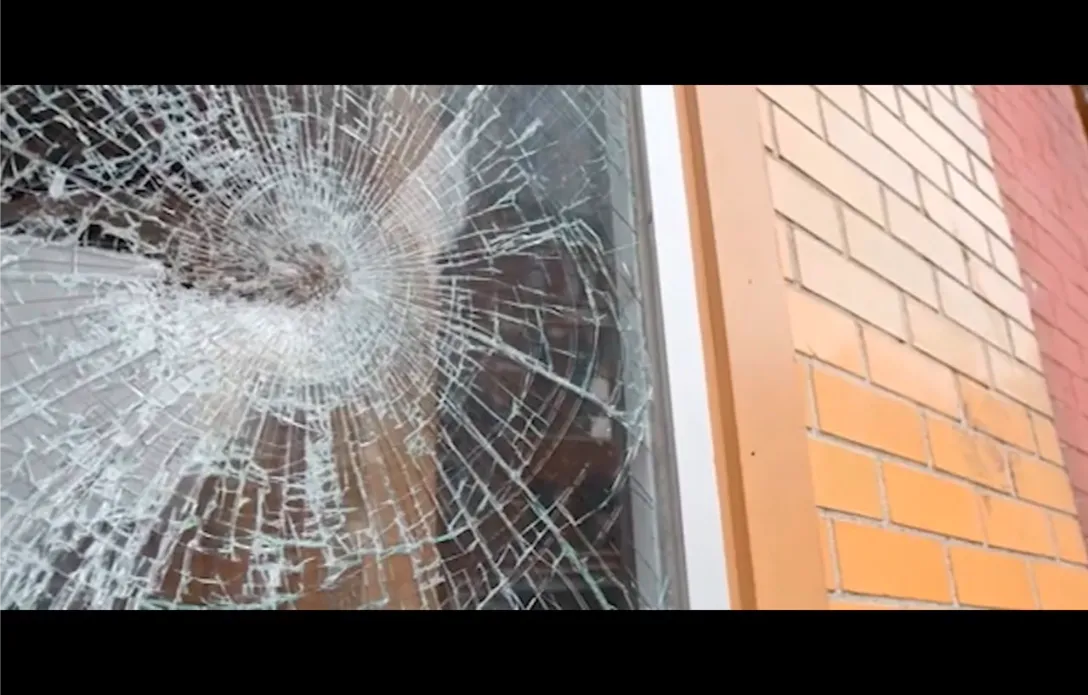
Security film does not make shop glass unbreakable. It holds the broken glass together in the frame, so one or two hits no longer open a hole. The attacker has to keep striking, makes more noise and stays on camera longer. For shopfronts, 8 mil is the usual starting point, and 12 mil is used for jewellery and other high-value stock.
A smash-and-grab is planned to be fast. The attacker breaks the glass, reaches in, takes what is closest and leaves before anyone can react. For a jewellery, phone or electronics shop, the glass on the door, the display window and the counter showcase is the only thing between your stock and a passer-by with a hammer.
If you want to understand the product itself first, read our general guide on what security film for windows is and how it works. This page is only about shops and what the film does during an attack.
How a smash-and-grab attack works on a shopfront
Most attacks on shops follow the same four steps. Each one shows where the glass matters.
The target is chosen
Gold, watches, new phones and laptops in the front display are easy to see from outside.
The glass is hit
Doors, windows and showcases are struck with a hammer, brick or metal bar. The lock is not the weak point.
Plain glass gives way
Ordinary glass falls out in large pieces. Tempered glass shatters into small cubes and the whole pane drops.
The grab takes seconds
The attacker only needs a hole big enough for an arm.
So the job of shopfront security is simple: stop the glass from opening on the first hits, and make the attack slower, louder and easier to see.
What security film for shops actually stops
Security film is a thick, clear polyester laminate bonded to the inside of the glass with a strong adhesive. When the glass breaks, the pieces stay stuck to the film instead of falling away.
| Threat | What the film does | Honest limit |
|---|---|---|
| Quick hammer or brick attack | Glass cracks but stays in place. The attacker must hit again and again to tear an opening. | With enough time and tools, a determined attacker can still get through. |
| Thrown objects and vandalism | The pane stays in the frame and flying shards are reduced. | The glass still needs replacing after a hit. |
| Grab through a small hole | A clean opening is hard to pull, especially when the film is anchored to the frame. | Thin film on a large pane can be pushed out in one piece. |
| Accidental breakage | Broken pieces stay on the film, which protects staff and customers. | None for this use. |
| Ram-raid with a vehicle | Very limited. | Needs bollards or barriers, not film. |
| Firearms | None. Film is not bullet-resistant. | Needs certified bullet-resistant glazing. |
The key word is delay. A few extra seconds of hitting glass that will not open is often enough for an attacker to give up, or for the alarm and people nearby to react. We do not promise that film stops every break-in, and you should be careful of anyone who does.
Why jewellery, phone and electronics shops need a different specification
A villa or office mainly needs film that holds glass after an accident. A high-value shop needs film chosen for an attack.
Front windows and counter showcases are the main targets.
Usually needs: 12 mil on the shopfront and showcases near the entrance, with the film anchored to the frame on the most exposed panes.
Many phone shops sit on busy streets or in malls with full-width glass.
Usually needs: 8 mil across the whole front and entrance door, or 12 mil where the newest phones sit in the window.
Holding large panes in the frame matters most here.
Usually needs: 8 mil or 12 mil, where the way the film is fixed at the edge matters as much as its thickness.
These are starting points. The final grade is confirmed at a site survey, after we check your glass type, pane sizes, frame and what you keep near the glass.
Choosing smash-and-grab window film thickness: 4, 8 or 12 mil
Film thickness is measured in mil (one thousandth of an inch). A thicker film is harder to tear, but thickness alone is not the full answer. Our full comparison of safety film thickness: 4 mil vs 8 mil vs 12 mil has the data sheet figures. Here is the short version for shops:
| Thickness | Where it fits in a shop | What it is good for |
|---|---|---|
| 4 mil | Back office, staff areas, interior partitions | Holding glass after accidental breakage |
| 8 mil | Standard shopfronts, entrance doors, mall units | Slowing down an opportunistic smash-and-grab |
| 12 mil | Jewellery fronts, high-value windows, showcases near the door | The strongest clear grade, with almost three times the break strength of 4 mil |
Fitting 4 mil on a jewellery front leaves you exposed. Paying for 12 mil on a back-office partition wastes money. The survey avoids both.
Edge attachment: the part most shop security quotes leave out
Film is trimmed to within about 3 mm of the frame. It holds the broken pieces together, but a hard enough hit can push the whole filmed pane out of the frame as one sheet. That is why the edge matters on a shopfront.
Film only
Holds the glass together. Fine for interior glass and lower-risk panes.
Edge sealing
A structural sealant joins the edge of the film to the frame, so the pane is much harder to push out. It is neat and almost invisible. We offer edge sealing on safety and security film jobs in Dammam, and we will tell you at the survey which panes need it.
Mechanical fixing
A metal profile fixed to the frame clamps the film edge. It is used on the highest-risk panes. Ask us whether your frame suits it.
Compare like with like
When you compare quotes, ask whether the price is for film only or film plus edge attachment. A cheaper film-only quote is not the same protection for a shopfront.
Shopfront security film vs laminated glass vs roller shutters
| Option | Strengths | Weak points | Best when |
|---|---|---|---|
| Security film on existing glass | No glass replacement, stays clear, quick to install, protects while the shop is open | Delays entry. It does not make glass unbreakable. | You want to upgrade the glass you already have |
| Laminated security glass | Strong built-in resistance | Costs more, glass must be replaced, longer lead time | New shop fit-out or very high-risk stock |
| Roller shutters or grilles | Strong physical barrier at night | No protection during opening hours. Many malls do not allow them. | Street shops that close fully at night |
Many shops combine them: security film for protection during the day and evening, with shutters, an alarm and CCTV after closing. For a deeper comparison, see our guide on safety film vs laminated glass.
What to ask before you buy security film for your shop
Any supplier can say "anti-shatter". These four questions show whether a quote is serious.
Which film and which grade?
Ask for the film name and its data sheet. The mil figure alone does not tell you how hard the film is to tear.
Which test, on which glass?
An attack-resistance test is not the same as a safety-impact test. A report for a different grade or glass type proves nothing for your shop.
How is the edge fixed?
Film only, edge sealing or mechanical fixing. This changes the protection more than most people expect.
What is in writing?
Film name, grade, number of panes and warranty should all be in the written quote.
Display case security film for jewellery counters and showcases
The shopfront is not the only target. In a grab inside the shop, the counter showcase is hit to take trays of rings or phones. Clear security film can also go on:
- Counter showcases and display cabinets
- Wall-mounted glass cabinets
- Glass display towers near the entrance
Our clear grades let through 87–90% of visible light, so products still look the way they should under your shop lighting. The film is cut to each pane so the edges stay neat.
How shop security film installation works
Site survey
We measure each pane and check glass type, frame and what sits near the glass.
Grade per pane
Shopfront, door and showcases may each need a different grade.
Written quote
Film name, grade, edge method and warranty, in writing.
Install inside
The film goes on the inside face, so your shopfront looks the same from outside.
Cure
The film may look slightly hazy for up to 30 days while it dries. Do not clean it in that time.
Shop in a mall?
Most Saudi malls have fit-out rules for shopfront changes. Security film goes on the inside and stays clear, so approval is usually simpler than for shutters or new glass. Check with mall management before installation, and tell us your trading hours so we can plan the work to keep disruption low.
What affects the price of shop security film in Saudi Arabia
There is no honest one-price answer. The cost depends on:
- Total glass area and number of panes
- Film thickness: 4, 8 or 12 mil
- Whether edge sealing or mechanical fixing is included
- Glass type and condition (cracked or damaged glass may need replacing first)
- Access: ground floor, high windows or a mall unit
- Whether showcases and counters are included
- Location, for shops outside Riyadh
Send us photos and rough sizes of your glass on WhatsApp and we will tell you what to expect before the survey.
Security film installation for shops in Riyadh, Dammam and across Saudi Arabia
Vision Guard is based in Al Malaz, Riyadh, and fits security film on shops in Riyadh and other Saudi cities. Our Riyadh team also carries out installations in Dammam and the Eastern Province.
Security film for shops: frequently asked questions
Will security film stop a thief from breaking my shop window?
It will not stop the glass from breaking. It holds the broken glass together, so a thief cannot open a hole with one or two hits. This delay, together with an alarm and CCTV, is what puts most smash-and-grab attempts off.
Is security film the same as bulletproof glass?
No. Security film is not bullet-resistant at any thickness. If you need protection against firearms, you need certified bullet-resistant glazing.
Will customers still see my display clearly?
Yes. Our clear grades let through 87–90% of visible light, so most people cannot tell the film is there.
Can security film go on a tempered glass shopfront?
Yes. On tempered glass the film holds the small broken pieces together, so the pane does not drop out at once. The right grade and edge method depend on the pane size, which we check at the survey.
Which thickness does a jewellery shop need?
Usually 12 mil on the shopfront and on showcases near the entrance, with edge attachment on the most exposed panes. We confirm it after checking your glass.
When can I clean the glass after installation?
Wait 30 days. The film can look slightly hazy while it dries. After that, use a soft cloth and normal glass cleaner, never abrasive cleaners or bristle brushes.
Protect your shop glass before it is tested
If you keep gold, watches, phones or electronics near the glass, start with a site survey. We check every pane and give you a clear written quote. Saturday to Thursday, 9:00 AM to 10:00 PM.