
Security film for schools is one of the fastest ways to make classroom, corridor and entrance glass safer without replacing it. The film bonds to the inside of existing glass and holds broken pieces together, so an accident, a storm or a deliberate attack is far less likely to send sharp glass towards students and staff. With the right thickness and an attachment system, it also slows down anyone trying to break in. This guide explains how schools in Saudi Arabia can plan it. For the full service, see our safety and security window film page.
Security film for schools works on existing windows and doors, so a school can upgrade its glass in stages without building work. Below, we explain where security film for schools helps most, how to choose the right film and how to plan the budget.
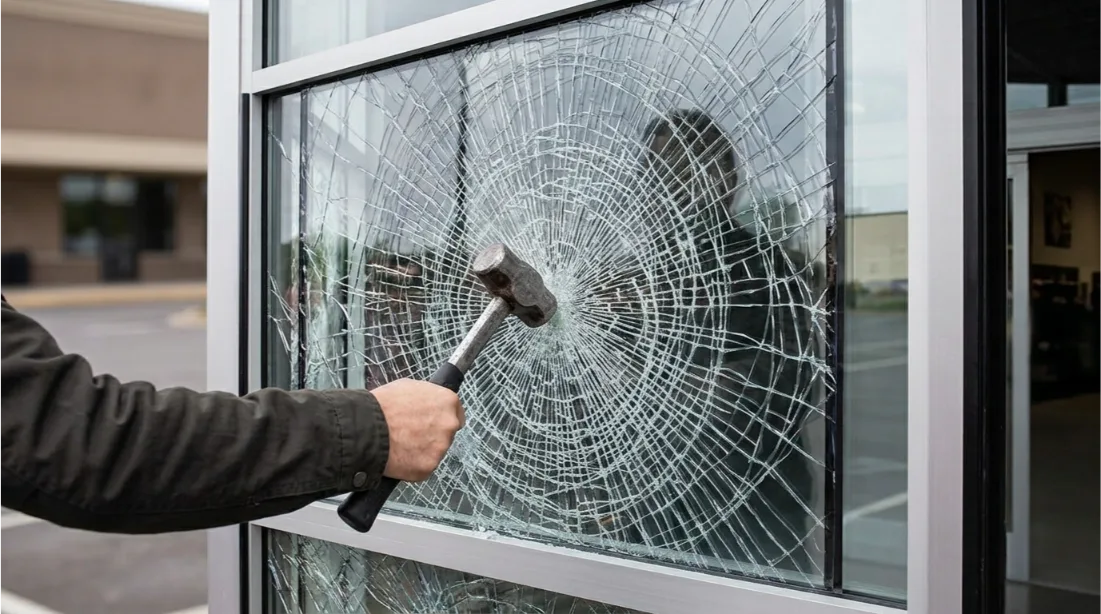
Why Schools Need Security Film on Their Glass
Schools have a lot of glass in places full of children: entrance doors, corridor windows, canteens, sports halls and stairwells. Ordinary annealed glass breaks into large, sharp pieces. Even a ball, a fall against a door or a strong dust storm can break a pane during school hours.
- Injury prevention: security film holds broken glass together instead of letting it fall.
- Forced entry delay: thicker film anchored to the frame makes it slower to get through the glass.
- Storm protection: film helps keep windows in one piece when strong winds carry debris.
- Heat and glare: some security films also reduce solar heat and glare in classrooms.
- Privacy: frosted or tinted options can screen classrooms from outside view.
7 Ways Security Film for Schools Makes Glass Safer
- Start at the entrance: main doors, side lights and reception glass are the first point of entry and need the strongest film.
- Cover ground-floor windows: these are the easiest to reach from outside.
- Protect high-traffic glass: corridor partitions, canteen glass and sports hall windows where children run.
- Anchor the film where risk is highest: an attachment system keeps the glass and film in the frame.
- Choose the right thickness: lighter safety film for upper floors, thicker security film for entrances. See our safety film thickness guide.
- Add privacy where needed: frosted bands on classroom doors and ground-floor windows.
- Keep records: a glass register showing which panes are filmed, with film names and dates.
Safety Film vs Security Film for Schools
| Need | Safety film | Security film with attachment |
|---|---|---|
| Hold broken glass together | Yes | Yes |
| Delay forced entry | Limited | Better, especially when anchored |
| Keep glass in the frame under heavy force | No | Better with an attachment system |
| Typical use in a school | Upper floors, internal glass | Entrances, ground floor, reception |
For the full difference, read safety film vs security film.
What Security Film for Schools Cannot Do
Being honest about limits helps schools plan properly. Security film does not make glass bulletproof, and it does not stop a determined attacker forever. It reduces injuries from broken glass and buys time. It works best as one layer in a wider school safety plan that includes locked doors, supervision and emergency procedures. Our article on security window film myths covers this in more detail.
Standards and Documents to Ask For
Ask the installer for the film manufacturer’s data sheet and any test reports for the exact film offered. Films are tested to different standards, for example impact tests for safety glazing, and blast tests such as ASTM F1642 (see the International Window Film Association guidance on safety and security film) for higher-security systems. A test result belongs to a specific film and installation method, so check that the report matches what is being installed.
How a School Security Film Project Works
- Glass survey: we walk the site with the school team and list every pane by risk.
- Proposal: film type, thickness and attachment for each area, with a phased plan if needed.
- Scheduling: work during weekends, after school hours or holidays so lessons are not disturbed.
- Installation: glass cleaned, film fitted and edges anchored where specified.
- Handover: inspection, glass register and care instructions for the cleaning team.
Planning the Budget for Security Film for Schools
Most schools phase the work: entrances and ground floor first, then corridors and upper floors. Filming existing glass usually costs much less than replacing it with laminated glass. Our guide to security film cost in Saudi Arabia explains what affects the price.
Frequently Asked Questions
How long does it take to install security film for schools?
It depends on the number of panes. Most schools fit security film for schools in phases over weekends or holidays, starting with entrances and the ground floor.
Is security film safe for children?
Yes. Its main job is to stop broken glass from falling as sharp pieces, which reduces the risk of cuts.
Can security film be installed while the school is open?
It is best fitted outside lesson time, such as weekends or holidays, so classrooms are free and the glass can cure undisturbed.
Will security film make classrooms darker?
Clear security film keeps classrooms bright. Tinted versions are available if the school also wants to reduce heat and glare.
How do cleaners care for filmed glass?
With a soft cloth and a mild, non-abrasive cleaner. Scrapers and blades should not be used on the film.
Security Film for Schools Across Saudi Arabia
Vision Guard installs security film for schools, nurseries and training centres from our Al Malaz, Riyadh base, with teams for Riyadh, Jeddah, Makkah and Dammam. See also our guides for offices and homes, or contact us to book a free glass survey for your school.

