
Home › Window Film › Window Film Energy Savings
Sun Control · Energy Guide
Window Film Energy Savings in Saudi Arabia
Cooling is the biggest line on most Saudi electricity bills. Here's how sun control window film cuts that load, what drives the saving, and how to estimate the payback for your building.
Window film saves energy by rejecting solar heat at the glass before it enters the room, so the air conditioning has less heat to remove and runs less. In a hot climate like Saudi Arabia, where cooling dominates the electricity bill, high-performance sun control film can reject up to 85% of solar energy (measured as TSER) and meaningfully reduce cooling demand on sun-facing glass. The saving is largest on west- and south-facing windows with big glass areas, and the film typically pays for itself over time through lower bills, with no need to replace the glazing.
In most Saudi homes and offices, air conditioning is by far the largest electricity user, and a big share of that load comes straight through the windows as solar heat. Sun control window film tackles the problem at its source — the glass — rather than asking the AC to work harder. This guide explains how the saving actually happens, what determines its size, and how to think about payback. For the installed service, see our window film service.
How Window Film Reduces Cooling Energy
Clear glass lets most of the sun's energy straight into the room, where it becomes heat your AC then has to remove. Sun control film changes that balance:
- It rejects solar heat at the glass — reflecting and absorbing a large share of solar energy before it enters, measured as TSER (Total Solar Energy Rejected).
- It blocks infrared — the part of sunlight felt as radiant heat — so less warmth reaches the interior.
- It steadies indoor temperatures — reducing hot spots near windows, so the AC cycles less and works more evenly.
Less heat coming in means the cooling system runs fewer hours at lower intensity, which is where the energy saving comes from.
Key point
The film does not cool the room — it stops heat from getting in. By cutting the cooling load, it lets your existing AC keep the same comfort while using less energy.
What Determines the Size of the Saving
| Factor | Bigger Saving When… |
|---|---|
| Glass area | Large windows / glass facades |
| Orientation | West- and south-facing glass |
| Film grade (TSER) | Higher TSER film |
| Existing glass | Single-pane, untreated glass |
| Run hours | AC running long hours daily |
A villa with large west-facing windows and basic single glazing has the most to gain; a small north-facing window already shaded gains the least. This is why a per-elevation survey matters — the film is matched to where the heat actually comes in. See the full architectural services range.
How to Think About Payback
The honest answer is that the exact saving depends on your building, your glass and how you run your cooling, so any single percentage quoted online is a guess. The useful way to estimate payback is to look at the cooling portion of your bill, identify the sun-facing glass driving the most heat gain, and weigh the film cost against the reduced cooling load over the years the film lasts. Because film is applied to existing glass and lasts many years, the cost is one-off while the saving recurs every cooling season. A site survey can model this for your specific elevations.
Savings Beyond the Energy Bill
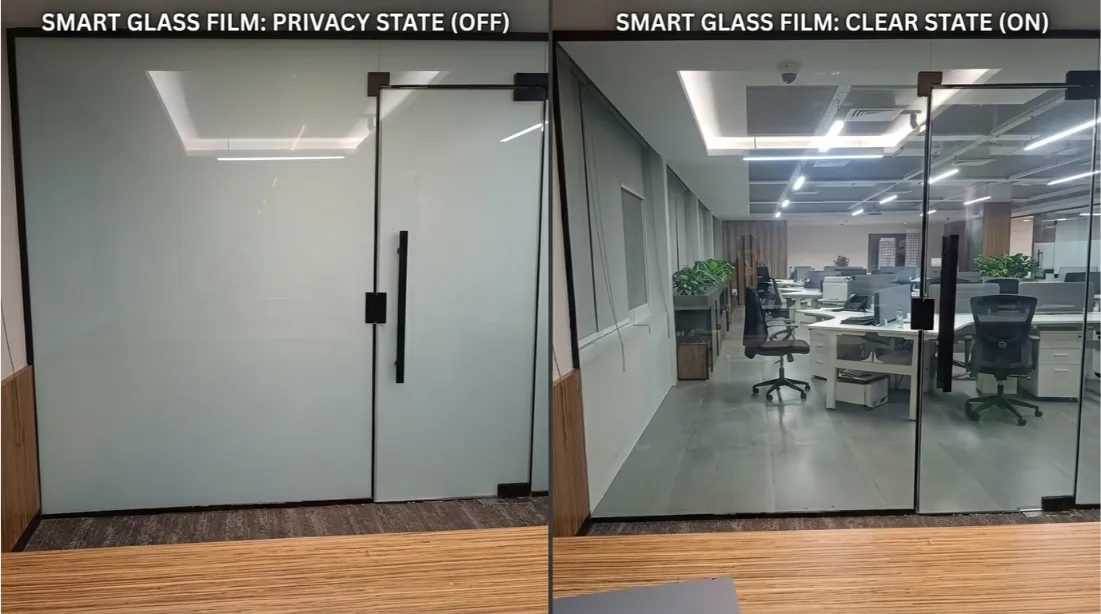
Energy is the headline benefit, but it is not the only one. By blocking 99% of UV, sun control film protects furniture, flooring and finishes from fading, deferring the cost of replacing sun-damaged interiors. It cuts glare for more comfortable rooms and screens, and it eases strain on the AC unit itself, which can extend its working life. For spaces that also want privacy on demand, switchable smart film adds instant frosting while still rejecting UV. Together these benefits strengthen the case well beyond the electricity meter.
Written by the VissionGuard Architectural Team — we survey elevations and fit sun control window film on villas and offices across Saudi Arabia. This guide reflects how solar-control film performs against cooling load in the Kingdom's climate.
Frequently Asked Questions
How does window film save energy?
Window film saves energy by rejecting solar heat at the glass before it enters the room, so the air conditioning has less heat to remove and runs fewer hours at lower intensity. High-performance sun control film can reject up to 85% of solar energy, which is measured as TSER, cutting the cooling load most on sun-facing windows.
How much can window film reduce my cooling bill?
The saving depends on your glass area, the orientation of your windows, the film grade and how long your AC runs, so there is no single fixed figure. The largest reductions come from high-TSER film on large west- and south-facing glass, and a site survey can estimate the effect for your specific building.
Does window film pay for itself?
In hot climates where cooling dominates the bill, sun control film often pays back over time because the cost is one-off while the lower cooling load recurs every season. Payback is fastest on buildings with large sun-facing glass and long air-conditioning hours.
Is window film better than replacing glass for efficiency?
For most existing buildings, film is the faster and far cheaper route to lower cooling energy because it is applied to the current glass without removing the windows. Replacing glazing with high-performance units also works but costs significantly more and usually only makes sense during a major renovation.
Cut Your Cooling Costs
VissionGuard surveys each elevation and fits the right sun control film to reduce your cooling load. Book a free site survey today.
Get a Free Consultation