
The Question Every Car Owner in Saudi Arabia Is Asking
When it comes to protecting a car’s paintwork in Saudi Arabia, two products come up in almost every conversation: PPF vs ceramic coating saudi arabia. Both are designed to keep a car looking its best for as long as possible. Both are applied by professional installers. And both have loyal supporters who will tell you that their preferred option is the better choice.
However, these two products are fundamentally different in what they do, how they work, and which situations they are best suited for. In a country like Saudi Arabia, where summer temperatures regularly exceed 45 degrees Celsius, where desert sand and highway debris are constant threats, and where car owners take great pride in the condition of their vehicles, choosing the wrong type of protection can be a costly mistake.
This guide is written to give car owners in Saudi Arabia a clear, honest, and straightforward answer to one of the most common questions asked at Vision Guard: PPF or ceramic coating, which one is right for my car? By the end of this article, the decision will be much easier to make.
Quick Answer
PPF protects against physical damage such as rock chips, scratches, and road debris. Ceramic coating protects against environmental damage such as UV rays, dust, water spots, and oxidation. They do different jobs. Many car owners in Saudi Arabia choose to use both together for maximum protection.
What Is Paint Protection Film (PPF)?
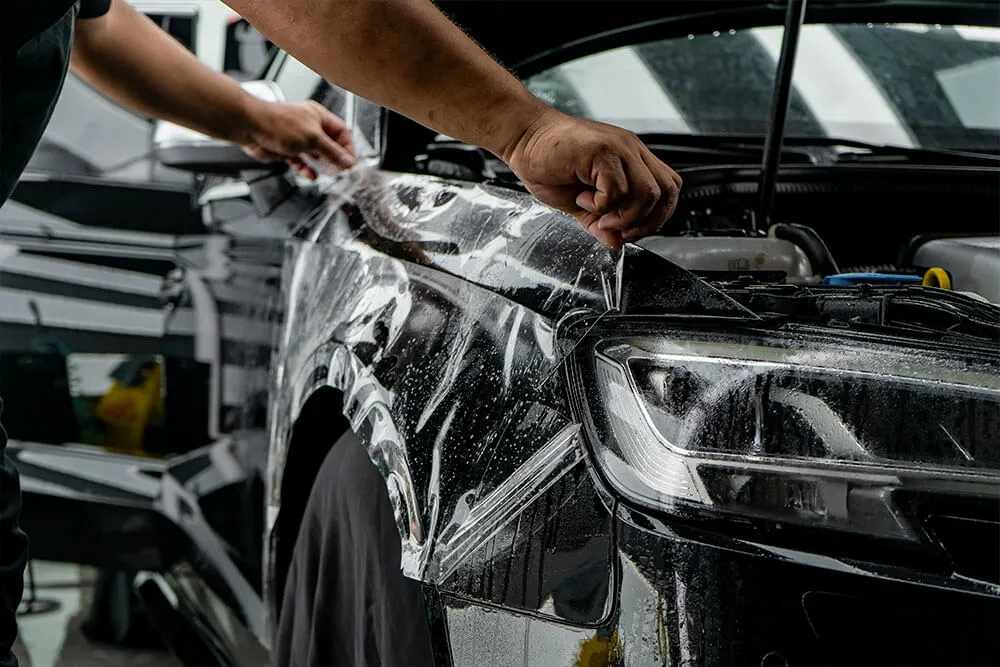
Paint Protection Film, often called PPF or clear bra, is a thick, transparent film made from thermoplastic urethane. It is applied directly to the painted surfaces of a car and acts as a physical barrier between the paintwork and the outside world. Think of it as an invisible shield that takes the punishment so that the car’s original paint does not have to.
PPF is specifically designed to absorb and resist physical impacts. When a small stone is thrown up from the road and hits the front of the car, it is the PPF that takes the damage rather than the paint beneath it. On most Saudi highways, where distances are long and road debris is common, this kind of protection is extremely valuable.

Key Features of PPF
- Physical impact protection — PPF absorbs rock chips, stone impacts, and road debris that would otherwise chip or scratch the car’s paint. This is its most important and unique function.
- Self-healing properties — Modern PPF contains elastomeric polymers that allow the film to heal minor surface scratches on its own when exposed to heat from the sun or warm water. Light swirl marks and fine scratches disappear over time without any manual effort.
- UV protection — PPF blocks a significant proportion of UV radiation, which slows down the fading and oxidation of the paint beneath it. This is especially important in Saudi Arabia’s intense sun.
- Invisible when applied correctly — When professionally applied, PPF is virtually invisible on the car’s surface. It preserves the original colour, finish, and depth of the paintwork without altering the vehicle’s appearance.
- Gloss or matte finish options — PPF is available in both gloss and matte finishes, allowing car owners to choose the look that best suits their vehicle. Matte PPF is particularly popular on matte-finish luxury and sports cars.
- Long lifespan — When professionally applied and properly maintained, high-quality PPF can last between 5 and 10 years, making it a long-term investment in the car’s appearance and value.
What Is Ceramic Coating?
Ceramic coating is a liquid polymer that is applied to a car’s exterior and chemically bonds with the factory paint at a molecular level. Once it has cured and hardened, it creates a semi-permanent protective layer over the paint that cannot be washed off or removed by normal cleaning. It is often described as a liquid glass layer because of the depth of gloss and the hardness it provides to the paint surface.
Unlike PPF, ceramic coating does not provide physical impact protection. A stone chip will still damage paint under a ceramic coating. Instead, ceramic coating excels at protecting against environmental threats such as UV radiation, oxidation, bird droppings, acid rain, water spots, and surface contaminants that slowly degrade paint over time. It also makes the car significantly easier to clean by creating a hydrophobic surface that causes water and dust to slide off rather than sticking to the paint.
Key Features of Ceramic Coating
- Deep gloss and enhanced colour — Ceramic coating gives the car’s paint a stunning depth of gloss and makes colours appear more vivid and rich. Many car owners describe the result as a permanent showroom shine.
- Hydrophobic surface — The coating creates a water-repelling surface that causes rain, water, and dust to bead up and roll off the car rather than settling on the paint. This keeps the car cleaner for longer and makes washing faster and easier.
- UV and oxidation resistance — Ceramic coating provides excellent protection against UV radiation, which is one of the primary causes of paint fading in Saudi Arabia. It also slows down the oxidation process that causes paint to look dull and aged over time.
- Chemical resistance — The hardened ceramic layer resists damage from bird droppings, tree sap, road salt, and mild acid contaminants that would otherwise etch into the paint over time.
- Easier and faster maintenance — Because dust and water do not adhere to a ceramic-coated surface as easily, the car stays cleaner for longer and requires less effort to wash. This is a practical benefit for car owners in Saudi Arabia’s dusty environment.
- Durability — Professional-grade ceramic coatings typically last between 2 and 5 years, depending on the quality of the product used, the quality of the application, and how the car is maintained.
PPF vs Ceramic Coating: A Full Comparison
The table below gives a complete side-by-side comparison of PPF and ceramic coating across all the factors that matter most to car owners in Saudi Arabia. This is the clearest way to understand how these two products differ and what each one is best suited for.
| Feature | Paint Protection Film (PPF) | Ceramic Coating |
|---|---|---|
| Type of Protection | Physical barrier against impacts | Chemical and environmental barrier |
| Rock Chip and Scratch Protection | Excellent | None |
| UV and Fade Protection | Very Good | Excellent |
| Self-Healing Properties | Yes | No |
| Hydrophobic Water Beading | Some films provide this | Excellent |
| Gloss and Shine Enhancement | Preserves factory finish | Significantly enhanced |
| Dust and Sand Resistance | Good physical barrier | Excellent, dust slides off |
| Ease of Cleaning | Good, regular washing required | Very easy, hydrophobic surface |
| Installation Complexity | High, requires certified professionals | Moderate, requires clean environment |
| Typical Lifespan | 5 to 10 years | 2 to 5 years |
| Cost (Relative) | Higher upfront investment | More affordable option |
| Suitable for Saudi Roads | Highly recommended | Recommended for urban driving |
| Can Both Be Combined | Yes, ceramic coating is applied on top of PPF for maximum protection | Yes, most effective when layered on PPF |
How Saudi Arabia’s Climate and Roads Affect Your Choice
Saudi Arabia presents some of the harshest conditions for car paintwork in the world. Understanding these conditions is essential for making the right choice between PPF and ceramic coating. The following factors make car paint protection in Saudi Arabia a necessity rather than a luxury.
Extreme Heat and UV Radiation
Saudi Arabia experiences some of the highest levels of solar UV radiation on the planet. Summer temperatures in cities like Riyadh, Dammam, and Jeddah regularly exceed 45 degrees Celsius, and the car’s exterior can reach temperatures far higher than this when parked in direct sunlight. Over time, UV radiation breaks down the clear coat and causes paint to fade, yellow, and oxidise. Both PPF and ceramic coating provide meaningful UV protection, but ceramic coating has a slight advantage when UV defence is the primary concern.
Desert Sand and Road Debris
Saudi roads, particularly on highways between major cities such as Riyadh, Jeddah, Mecca, Dammam, and Buraydah, are frequently covered with fine sand and loose gravel. This sand causes swirl marks during washing and fine surface abrasion over time, while loose stones create chips and impacts on the front bumper, bonnet, and side mirrors at highway speeds. For drivers who regularly use these routes, PPF is the more appropriate choice because it provides the physical barrier needed to protect against these impacts. Ceramic coating alone cannot protect against rock chips.
Dust Storms and Airborne Particles
Dammam, Riyadh, and other cities in Saudi Arabia experience frequent dust storms that deposit a thick layer of fine particles across the car’s entire exterior. Removing this dust safely requires gentle washing methods. Ceramic coating’s hydrophobic properties make it significantly easier to wash dust away safely after a dust storm, as the particles do not bond as strongly with the coated surface. This makes ceramic coating particularly practical for city driving across the Kingdom.
High Humidity on the Coasts
Jeddah and the coastal areas of the Eastern Province experience high levels of humidity combined with intense heat. This combination accelerates oxidation and can cause water spots to form on unprotected paint. Ceramic coating provides excellent protection against both oxidation and water spotting, making it especially valuable for vehicles used in coastal cities.
Vision Guard Recommendation for Saudi Arabia
For highway drivers and owners of luxury or high-value vehicles, PPF is the priority. For city drivers and those focused on appearance and easy maintenance, ceramic coating is the primary choice. For maximum protection in Saudi Arabia’s climate, combining both is the ideal solution.
PPF vs Ceramic Coating: Understanding the Cost in Saudi Arabia
Cost is one of the most frequently asked questions when it comes to choosing between PPF and ceramic coating. The price difference between the two is significant, and understanding what drives this difference helps in making an informed decision that suits the budget.
| Paint Protection Film (PPF) | Ceramic Coating |
|---|---|
| Cost Level: Higher upfront investment | Cost Level: More affordable option |
| Partial PPF (front bumper and bonnet only) is the most budget-friendly PPF option | Entry-level ceramic coating is accessible for most car owners |
| Full-body PPF is a premium service suited for luxury and high-value vehicles | Premium multi-layer ceramic coating offers longer durability and deeper protection |
| Lifespan: 5 to 10 years — cost is spread over a much longer period | Lifespan: 2 to 5 years — may require reapplication every few years |
| Long-term value is excellent as it prevents costly paint repairs | More frequent reapplication can add to total cost over time |
It is important to view both PPF and ceramic coating as long-term investments rather than short-term expenses. A car with PPF is protected from rock chip damage that can cost several hundred to several thousand Saudi Riyals to repair professionally. A car with ceramic coating requires less frequent washing and detailing, saving time and money over the years.
For many car owners in Saudi Arabia, the most cost-effective approach over the long term is to apply PPF to the high-impact areas of the car and ceramic coating over the rest. This combined approach provides comprehensive protection at a total cost that is often lower than what would be spent on paint repairs and repainting over the same period of time.
Which Option Is Right for Your Car in Saudi Arabia?
The right choice between PPF and ceramic coating depends on the type of driving done, the value of the vehicle, the budget available, and the results that are most important to the car owner. The following three scenarios cover the most common situations faced by car owners across Saudi Arabia.
Choose PPF If
- Frequent highway driving is part of the routine — particularly on long routes between Saudi cities where stone chips and road debris are a constant risk.
- The vehicle is new, luxury, or high-value — such as a Land Cruiser, Prado, BMW, Mercedes, or any car where maintaining the original paintwork is important for resale value.
- Protection against physical damage is the main priority — and the goal is to avoid costly paint repairs caused by chips, scratches, and road impacts.
- The car is frequently parked in outdoor spaces — such as car parks, roadsides, or open areas where door dings and minor abrasions are common.
- A long-term solution is preferred — PPF’s 5 to 10-year lifespan means that it does not need to be replaced as frequently as ceramic coating.
Choose Ceramic Coating If
- Most driving is done within the city — such as daily commuting in Riyadh, Jeddah, Dammam, or other urban areas where highway debris is less of a concern.
- A deep, glossy appearance is a priority — ceramic coating dramatically enhances the visual appearance of the paint and gives the car a permanently polished look.
- Easy maintenance is important — the hydrophobic properties of ceramic coating mean that dust, sand, and water slide off the car more easily, reducing washing time and frequency.
- Budget is a consideration — ceramic coating is significantly more affordable than full-body PPF while still providing meaningful protection against UV, oxidation, and environmental damage.
- The car is already protected against physical damage by PPF — ceramic coating applied on top of PPF combines the best of both products.
Choose Both PPF and Ceramic Coating If
- Maximum protection is the goal — PPF applied to high-impact areas (front bumper, bonnet, side mirrors, door edges) and ceramic coating applied over the entire car provides the most comprehensive paint protection available.
- The vehicle is a luxury car, sports car, or daily driver with high mileage — these vehicles benefit most from the combined approach, as they face both heavy physical impact risk and daily environmental exposure.
- Long-term resale value is important — a car that has been protected with both PPF and ceramic coating will maintain its paint in significantly better condition over time, which supports a higher resale value.
- The car is regularly used in both city and highway conditions — the combined approach covers all bases, providing physical protection on the road and easy cleaning in daily use.
Can PPF and Ceramic Coating Be Used Together?
Yes. Applying both PPF and ceramic coating together is not only possible, it is widely considered to be the most effective car paint protection strategy available. Many car owners across Saudi Arabia, particularly those with luxury vehicles, performance cars, and premium SUVs, choose this combined approach for exactly this reason.
The typical approach is to apply PPF to the areas of the car most exposed to physical impacts. These areas include the front bumper, the bonnet, the side mirrors, the door edges, the rear bumper, and the rocker panels. Once the PPF has been applied and cured, ceramic coating is applied over the entire exterior of the car, including over the top of the PPF itself.
This combination provides the following benefits all at once.
- Physical protection from rock chips and road debris on all high-impact surfaces through PPF
- Self-healing properties for minor scratches on PPF-covered areas
- Deep gloss and enhanced appearance across the entire car through ceramic coating
- Hydrophobic water and dust repellency across the full exterior
- UV and oxidation resistance on all painted and PPF-covered surfaces
- Extended lifespan of the PPF itself, as the ceramic coating protects the film’s surface
For car owners in Riyadh who regularly drive on the Ring Road or long-distance routes to Jeddah or Dammam, and who also want a car that looks immaculate every day, the combined PPF and ceramic coating approach is the clear recommendation from the Vision Guard team.
How to Maintain PPF and Ceramic Coating in Saudi Arabia
Both PPF and ceramic coating require proper care to maintain their performance and appearance over time. The good news is that both products significantly reduce the amount of effort needed to keep a car clean. The following tips are specifically relevant for car owners in Saudi Arabia’s climate.
Maintenance Tips for PPF
- Regular gentle washing — Wash the car at least once a week using a pH-neutral car shampoo and a soft microfibre wash mitt. In Saudi Arabia’s dusty environment, more frequent washing may be needed after dust storms.
- Avoid automatic car washes with brushes — Abrasive brushes in automated car washes can damage the film’s surface over time. Hand washing or touchless car washing is recommended for PPF-covered vehicles.
- Allow the self-healing properties to work — If light scratches appear on the PPF surface, expose the car to direct sunlight or use warm water to trigger the self-healing process. This should restore the film’s surface in most cases.
- Inspect the film edges regularly — Check the edges of the PPF film periodically to ensure they remain properly sealed. If any lifting or peeling is noticed, contact Vision Guard for a repair or re-application.
Maintenance Tips for Ceramic Coating
- Wash regularly with pH-neutral shampoo — Use a pH-neutral car shampoo and a clean microfibre cloth or mitt. Avoid harsh detergents that can degrade the ceramic layer over time.
- Rinse dust away gently after dust storms — After a dust storm, rinse the car with water before wiping. Do not wipe dry dust across a ceramic-coated surface as this can cause micro-scratches.
- Apply a ceramic booster every 6 to 12 months — A ceramic booster or topping product can be applied periodically to refresh the hydrophobic properties and extend the lifespan of the coating.
- Avoid leaving bird droppings or tree sap on the surface — Although ceramic coating resists these contaminants, leaving them on the surface for extended periods can still cause damage. Remove them promptly.
Frequently Asked Questions About PPF vs Ceramic Coating in Saudi Arabia
Is PPF worth the investment in Saudi Arabia?
Yes. In Saudi Arabia, where highway driving on roads with significant debris is common and UV radiation is intense, PPF is one of the most practical investments a car owner can make. It prevents the kind of paint damage that is both expensive and difficult to repair professionally. For owners of new, luxury, or high-value vehicles, PPF pays for itself by avoiding the cost of repainting or paint correction over time.
Can ceramic coating be applied in Saudi Arabia’s heat?
Yes, but the application must be carried out by a professional in a controlled environment. Ceramic coating needs to be applied at the right temperature and humidity level for the product to bond correctly with the paint. Vision Guard’s automobile service centre in Riyadh provides a controlled installation environment to ensure that every ceramic coating application is carried out to the highest standard regardless of the outdoor temperature.
How long does PPF last in Saudi Arabia’s heat?
High-quality PPF that is professionally applied can last between 5 and 10 years in Saudi Arabia’s climate. The key factors that affect longevity are the quality of the film used, the quality of the installation, and how well the film is maintained. Vision Guard uses only premium-grade PPF products that are specifically designed to resist yellowing, peeling, and delamination in high-temperature environments.
Can ceramic coating protect against sand and dust in Saudi Arabia?
Ceramic coating does not prevent sand and dust from landing on the car, but its hydrophobic and oleophobic properties make it significantly easier to remove dust and sand safely. Because the coated surface is very smooth and the dust does not bond as strongly with it, rinsing with water is often enough to remove most of the dust after a dust storm. This reduces the risk of swirl marks being created during the cleaning process.
Which is better for a Land Cruiser or Prado in Saudi Arabia?
For large SUVs such as the Toyota Land Cruiser and Prado that are commonly driven on Saudi highways and desert routes, PPF applied to the front bumper, bonnet, and side mirrors is strongly recommended as the primary protection against rock chips and road debris. Ceramic coating applied over the rest of the body provides easy cleaning and UV protection. The combined approach is ideal for these vehicles, especially given their high resale value in the Saudi market.
Does Vision Guard offer both PPF and ceramic coating in Riyadh?
Yes. Vision Guard offers professional Paint Protection Film installation, ceramic coating as part of its car detailing services, and the combined PPF plus ceramic coating package for clients in Riyadh and across Saudi Arabia. The team provides a free consultation to assess the vehicle and recommend the most suitable protection package based on the client’s driving habits, vehicle type, and budget.
How much does it cost to apply both PPF and ceramic coating in Saudi Arabia?
The cost of applying both PPF and ceramic coating depends on the size of the vehicle, the coverage area selected for PPF, and the grade of ceramic coating chosen. Partial PPF covering the front bumper and bonnet combined with a full-body ceramic coating is the most popular and cost-effective combined package. Vision Guard provides a transparent, itemised quotation for every project. Contact the team for a free consultation and a personalised price estimate.
Explore Vision Guard’s Automobile Services
Vision Guard provides a complete range of automobile protection and care services across Saudi Arabia. Whether a new car needs full paint protection or an existing vehicle needs a refresh, the following services are available.
- Paint Protection Film (PPF) — Professional PPF installation for full-body coverage or targeted high-impact areas. Available for all vehicle types in Riyadh and across Saudi Arabia. PPF is the strongest protection available against rock chips, scratches, and road debris.
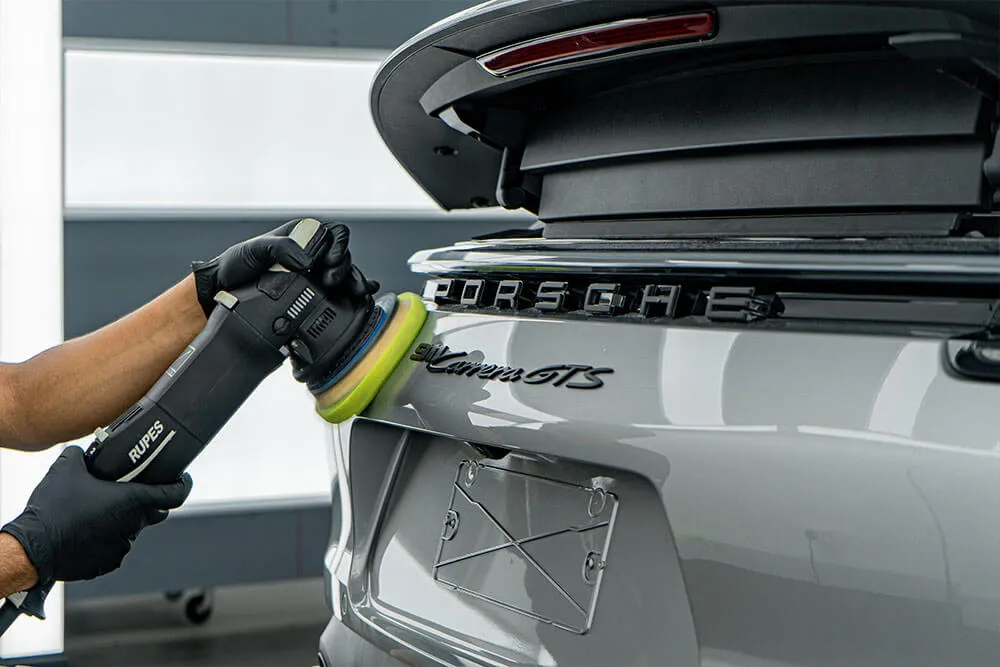
- Car Detailing Services — Vision Guard’s complete car detailing service includes exterior polishing, paint correction, interior deep cleaning, and ceramic coating application. Every detail is handled with care to restore and protect the vehicle’s appearance.
- Window Tint for Vehicles — Professional car window tinting that blocks UV rays and reduces heat inside the vehicle. Particularly valuable in Saudi Arabia’s intense sun, window tinting also improves privacy and driving comfort.
- Window Film for Buildings — In addition to automobile services, Vision Guard provides architectural window film solutions for homes, offices, and commercial buildings across Saudi Arabia.
- Phone and WhatsApp: +966 55 503 3542
- Email: Info@vissionguard.com
- Location: Al Malaz, Riyadh, Saudi Arabia
- Services available across Riyadh, Jeddah, Dammam, Mecca, Buraydah, and all of KSA