
Home › Smart Film › How Does Smart Glass Work?
Architectural Glass · Explained
How Does Smart Glass Work? The Science of Switchable Glass
From frosted to crystal-clear in under a second. Here's the technology behind switchable smart glass, what powers it, and where it earns its place in Saudi homes and offices.
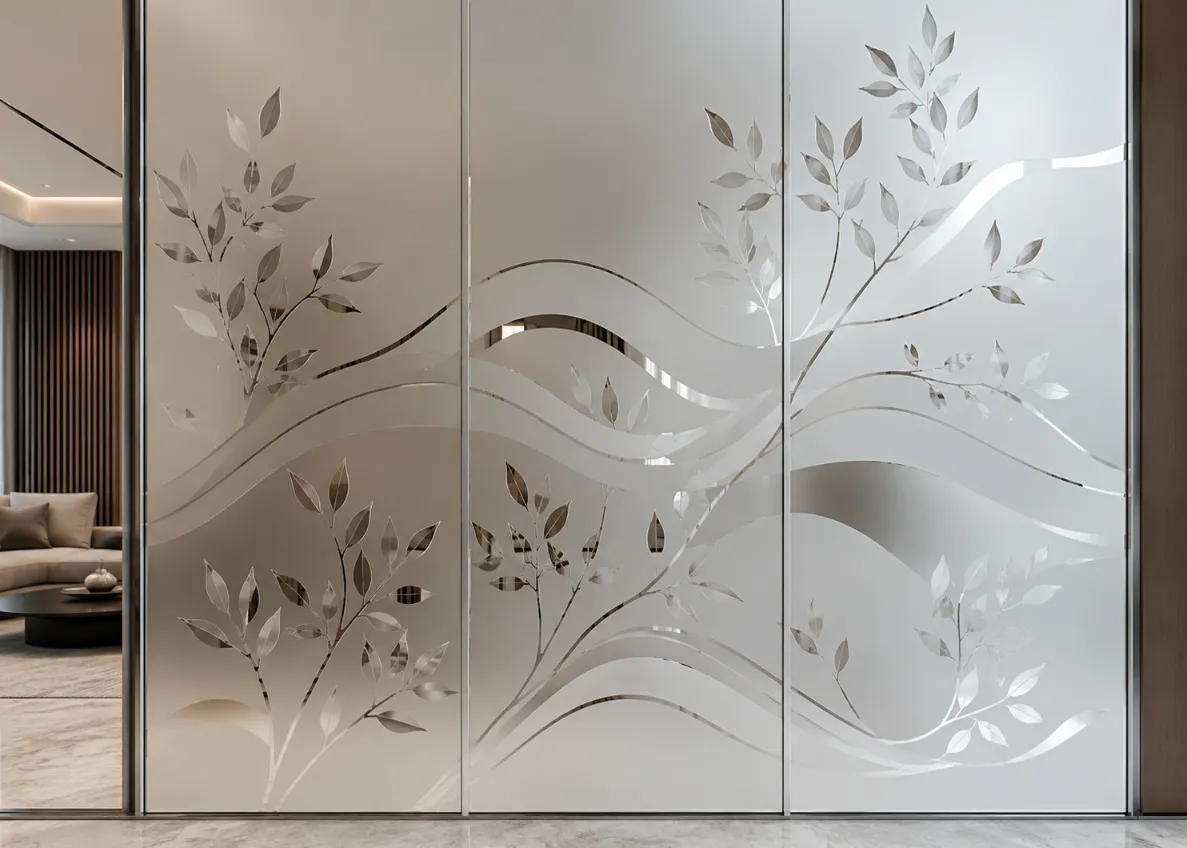
Smart glass works by sandwiching a special film between two layers of glass that changes how it handles light when electricity is applied. The most common type uses PDLC — polymer-dispersed liquid crystal. With the power off, microscopic liquid-crystal droplets scatter light at random, so the glass looks frosted and private. Switch the power on and those droplets line up in an instant, letting light pass straight through, so the glass turns clear. No power means private; power means clear. That single electrical change is the whole principle behind switchable glass.
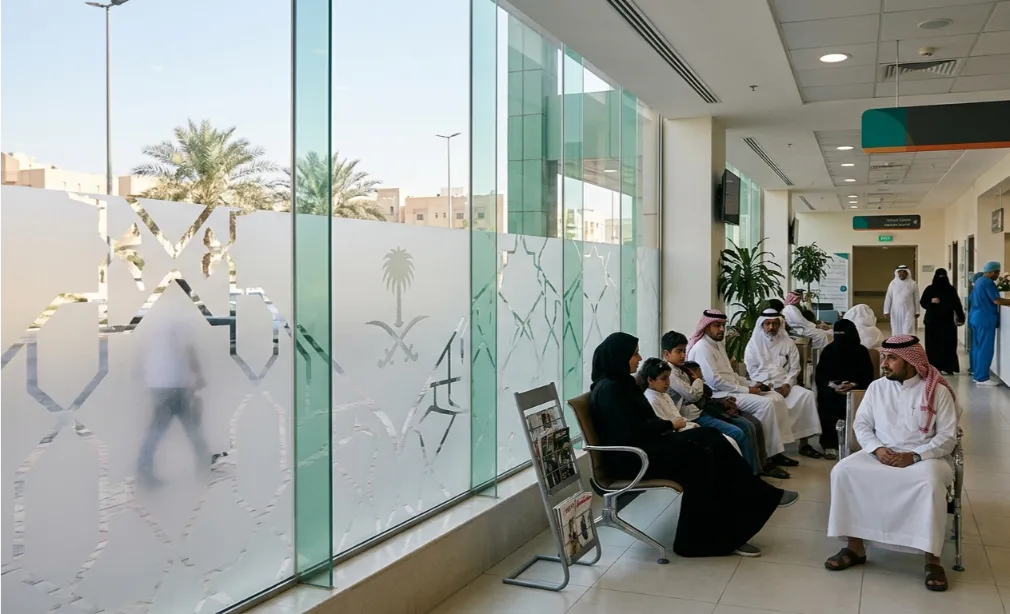
Switchable glass has moved from a futuristic novelty to a practical, everyday feature in modern buildings across Saudi Arabia. You'll find it in boardrooms that need privacy on demand, in villa bathrooms, in clinic partitions and in shopfronts that go opaque after hours. But the mechanism behind that frosted-to-clear trick is often misunderstood. This guide breaks down exactly how smart glass works, the main types available, and how it compares with applying a switchable smart film to glass you already own.
What Is Smart Glass?
Smart glass — also called switchable glass, privacy glass or smart switchable glass — is glazing that can change its light-transmission properties on command. Instead of relying on blinds or curtains, the glass itself shifts between a private, opaque state and a transparent one.
The defining feature is control. A pane of smart glass responds to an input — usually an electric current, but sometimes heat or light — and adjusts accordingly. The version most people mean when they talk about instant privacy is electrically switchable PDLC glass, because it reacts in well under a second and the change is total: fully frosted to fully clear.
The Science: How PDLC Smart Glass Switches
PDLC stands for polymer-dispersed liquid crystal. The active layer is a thin film containing thousands of tiny liquid-crystal droplets suspended in a clear polymer. This film is laminated between two transparent conductive layers and bonded inside the glass. Here is what happens in each state:
- Power off (frosted): with no current flowing, the liquid-crystal droplets sit in random orientations. Incoming light hits them at every angle and scatters, so the eye sees a milky, translucent surface. Light still passes through — the glass isn't dark — but you can't see a clear image through it.
- Power on (clear): apply a low-voltage current and an electric field forms across the film. The droplets snap into alignment along that field, creating a straight optical path. Light travels through without scattering, and the glass becomes transparent.
Because liquid crystals respond to the electric field almost instantly, the switch happens in a fraction of a second. Remove the power and the droplets fall back into disarray, returning the glass to its private frosted state.
Key point
PDLC smart glass is private in its default, unpowered state. It only needs electricity to become transparent — which means a power cut leaves the glass frosted, never exposed.
How the Switch Happens, Step by Step
Signal Sent
A switch, app or sensor sends low-voltage power to the film.
Field Forms
An electric field builds across the conductive layers.
Crystals Align
Liquid-crystal droplets line up along the field.
Glass Clears
Light passes straight through — the pane turns transparent.
Types of Smart Glass Technology
PDLC is the most widely used switchable technology, but it isn't the only one. The main families differ in what triggers the change and how quickly they respond.
| Technology | Triggered By | Switch Speed | Typical Use |
|---|---|---|---|
| PDLC | Electricity | Under 1 second | On-demand privacy: offices, homes, partitions |
| Electrochromic | Electricity | Minutes (gradual) | Tinting for solar control on facades |
| SPD (suspended particle) | Electricity | Seconds | Variable tint, glare control |
| Thermochromic | Heat | Passive | Auto-tinting as temperature rises |
| Photochromic | Light (UV) | Passive | Auto-darkening in sunlight |
For instant frosted-to-clear privacy — the effect most Saudi homeowners and offices want — PDLC is the practical choice, which is why it's the technology behind every VissionGuard switchable installation.
Smart Glass vs Smart Film: What's the Difference?
There are two ways to get switchable privacy, and the distinction matters for cost and disruption:
- Laminated smart glass has the PDLC layer built into a brand-new glass unit at the factory. It's the route for new builds or full glass replacement.
- Smart film is the same PDLC layer supplied as a self-adhesive film that's applied directly onto your existing glass. There's no need to replace the windows or partitions — the film does the switching.
For most retrofit projects, smart film delivers the identical frosted-to-clear effect at lower cost and with far less disruption, since the existing glass stays in place. Our complete smart film service covers supply and professional installation, and you can see how it fits into the wider range on our architectural glass services page.
Why Switchable Glass Works Well in Saudi Arabia
Beyond instant privacy, switchable glass earns its place in the Saudi climate for practical reasons. The PDLC layer blocks close to 99% of ultraviolet light, protecting furniture, flooring and fabrics from the fading that strong sun causes. In its frosted state it also softens harsh glare. And because it replaces curtains and blinds with a sealed, wipeable surface, it suits dust-prone environments and clean, modern interiors — a strong fit for the new-build villas and offices going up across Riyadh, Jeddah and the wider Kingdom.
Written by the VissionGuard Architectural Team — we supply and install PDLC smart film and switchable glass on residential and commercial projects across Saudi Arabia. This guide reflects current switchable-glass technology and how it performs in real installations.
Frequently Asked Questions
Does smart glass need power all the time?
No. PDLC smart glass only draws power when you want it transparent. In its default unpowered state it stays frosted and private, so it uses electricity only during the periods you choose to make it clear, and a power cut simply leaves it frosted.
Is smart glass private when the power is off?
Yes. With PDLC technology the glass is frosted and private whenever the power is off, and only becomes transparent when a current is applied. This is the opposite of what many people assume and means privacy is the safe default state.
How fast does smart glass switch?
PDLC smart glass switches between frosted and clear in under one second because liquid crystals respond to an electric field almost instantly. The change appears immediate to the eye, with no waiting or gradual fade.
Can I add smart glass to my existing windows?
Yes. You don't have to replace your glass to get the effect. A self-adhesive PDLC smart film can be applied to your existing windows or partitions, delivering the same switchable frosted-to-clear privacy without removing the glazing.
Thinking About Switchable Privacy?
VissionGuard supplies and installs PDLC smart film across Saudi Arabia. Book a free site survey and see switchable glass in action.
Get a Free Consultation