
Many homes feel hot even when the air conditioner is running all day. The problem is often not the AC. It is the windows. Glass lets in the sun’s heat, and once that heat enters, it stays trapped. This is why homeowners look for the best home window tint for heat reduction.
Window film acts like a smart shield. It filters sunlight before heat enters the home. When installed correctly, the right window tint can make a home cooler, calmer, and more energy-efficient without blocking natural light.

Table of Contents
How Window Film Helps Reduce Heat at Home
Sunlight carries visible light, UV rays, and solar heat. Most excess heat comes from infrared energy, not brightness. Standard glass does little to stop it.
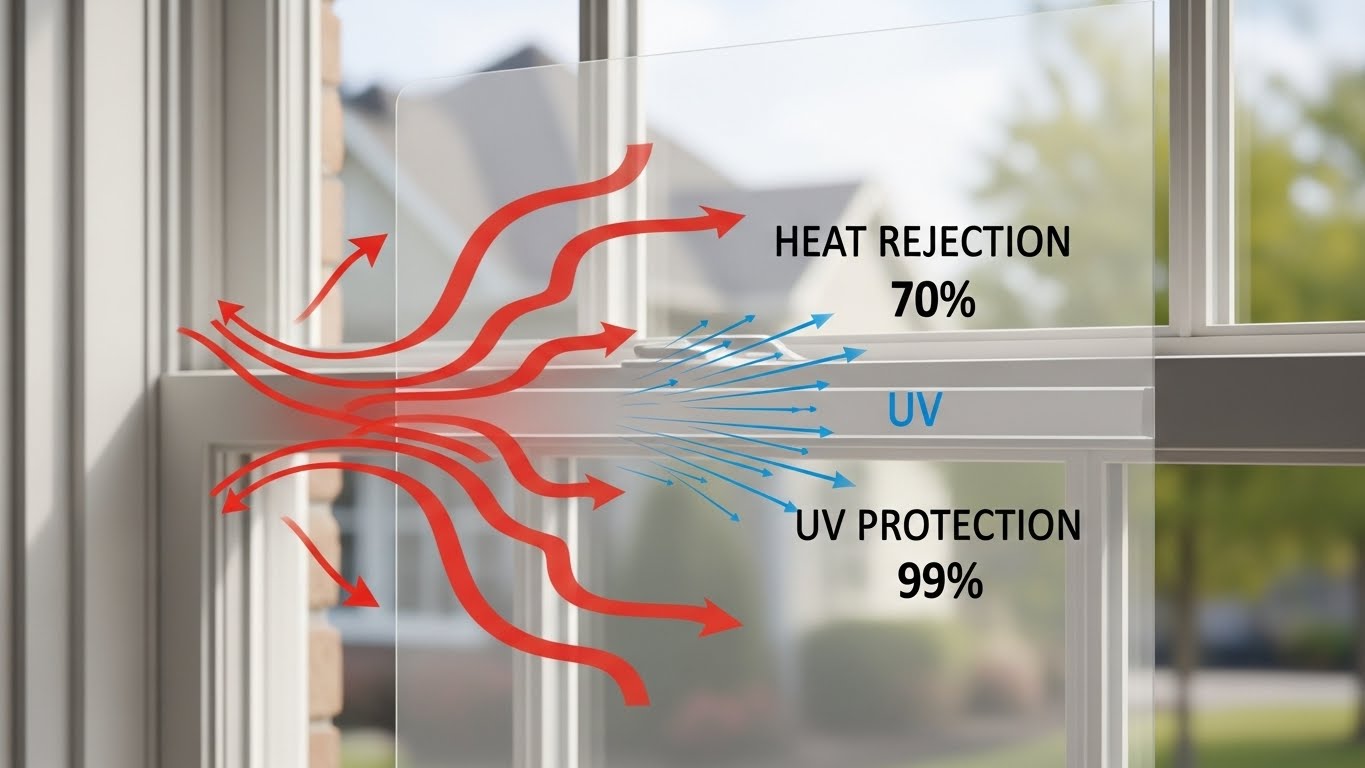
Window film can help by reflecting and absorbing solar heat before it enters living spaces. This reduces heat transfer through glass and limits heat gain during the hottest parts of the day.
Studies show that up to 30 percent of cooling energy is lost through windows, due to heat coming inside. Heat reducing window film directly addresses this issue.
Best Window Film for Heat Reduction in Real Homes
The best window film focuses on heat rejection, clarity, and durability. Modern films are not dark or mirror-like by default. Many are designed to be nearly invisible while delivering superior heat performance.
High-quality window film can:
- Reject up to 97 percent of infrared heat
- Block up to 99 percent of harmful UV rays
- Reduce glare without darkening rooms
- Help control heat and glare in large windows
This makes window film especially useful in homes with large windows and strong afternoon sun exposure.
Best Window Tint for Heat Reduction Without Losing Natural Light
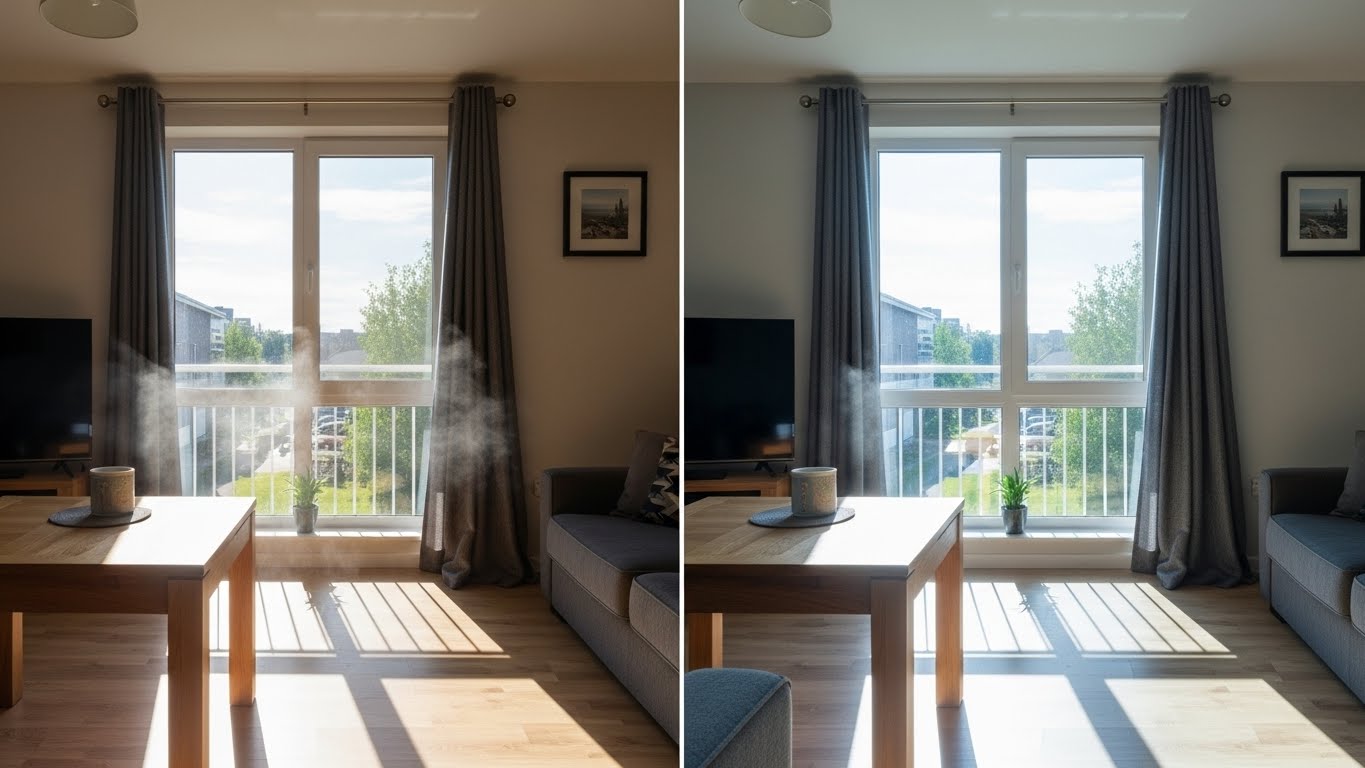
A common concern is losing daylight. Premium window tint avoids this problem. The film allows visible light to pass through while reflecting heat away.
Think of it like wearing clear sunglasses. The view stays sharp, but the discomfort disappears. This balance is what separates the best film from basic glass film or curtain solutions.
Compared to curtains, blocking window film works all day without closing off the room. Curtains block light, but film blocks heat.
Heat Reflective and Solar Control Technology Explained
Heat reflective window film uses solar control technology to manage heat and UV at the glass level. Solar control films are designed to reflect the sun’s heat before it enters the home.
This process:
- Reduces the amount of heat entering the room
- Keeps indoor temperatures stable
- Helps keep heat out in summer
- Reduces cooling costs over time
Unlike mirror film, modern reflective films maintain clear outward visibility and daytime privacy.
Energy Savings and Lower Energy Bills
When the heat stays outside, the air conditioner works less. That leads directly to lower energy bills.
Homeowners using heat control window film often see:
- Cooling cost reductions of 30 to 50 percent
- More stable indoor temperatures
- Less strain on HVAC systems
Over time, window film offers long-term value. Many films last over 20 years, making them a cost-effective upgrade for any residential window.
Window Tinting for Homes: Choosing the Right Film
Not every window needs the same type of film. The film you choose depends on window direction, glass type, and room use.
For example:
- Living rooms benefit from glare control and heat reflection
- Bedrooms benefit from daytime privacy and heat blocking
- Home offices benefit from reduced glare and natural light balance
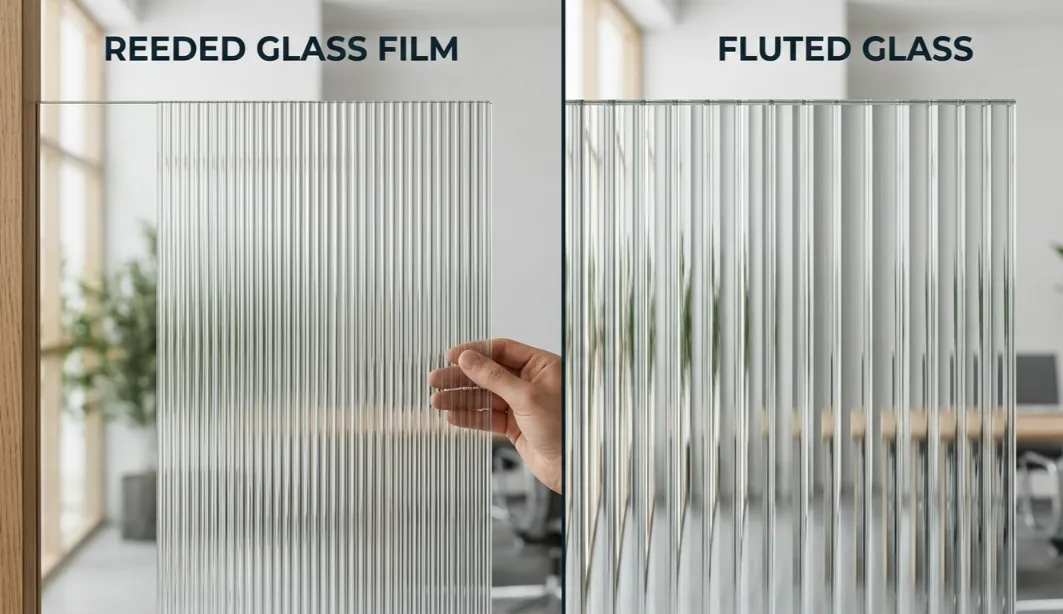
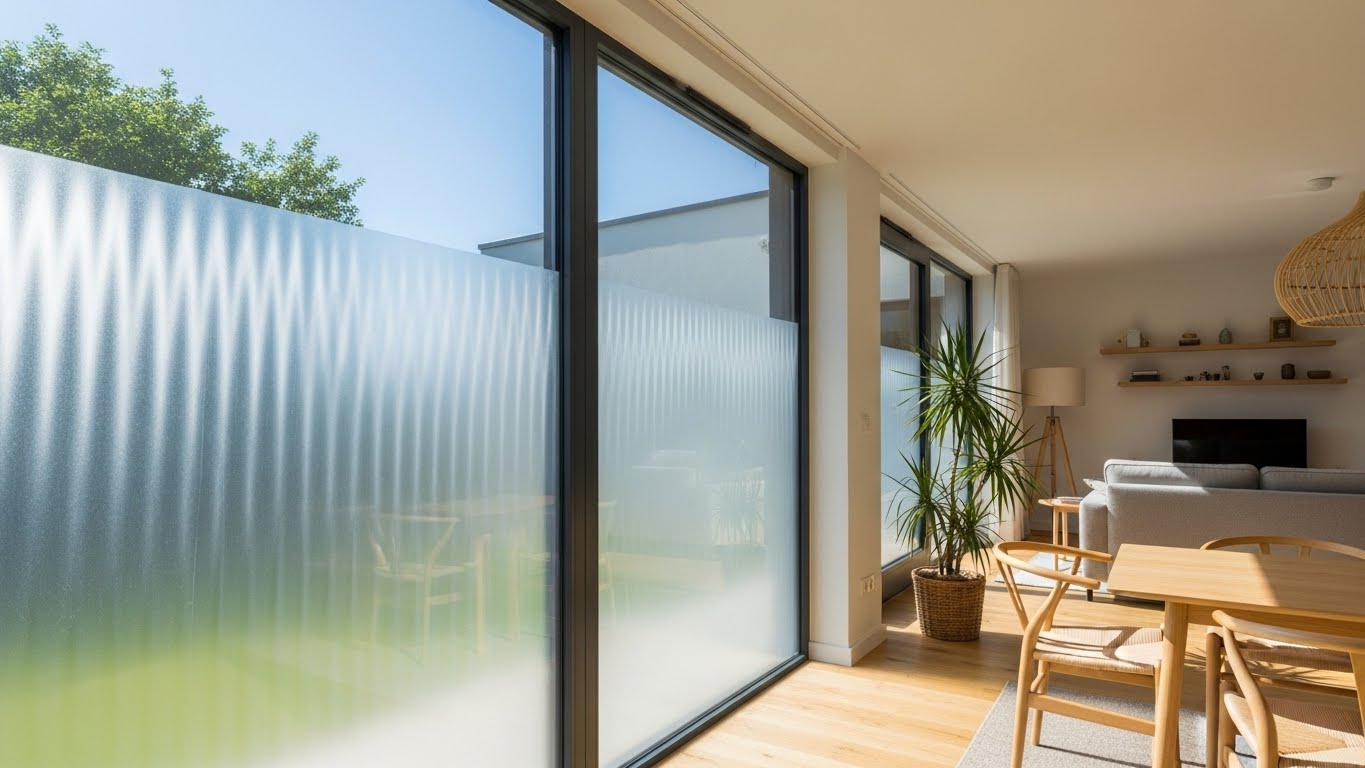
Some homes also use frosted film or privacy window film in bathrooms while keeping clear solar control films elsewhere.
Choosing the right window tint means matching the right film to the right home window.
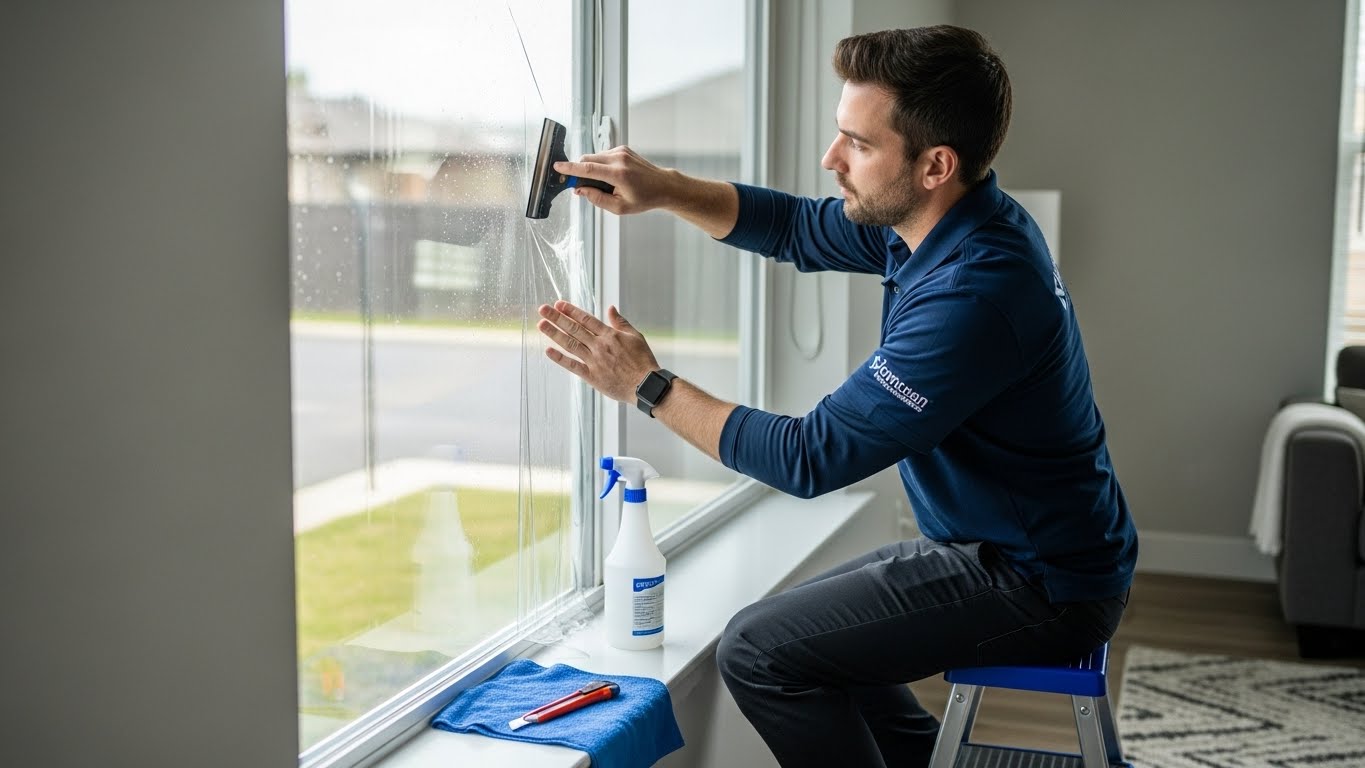
Professional Film Installation Matters
Window film installation is a precision task. Film is applied directly to glass, and poor installation can reduce performance or damage seals, especially in low-e window systems.
Professional film installation ensures:
- Proper adhesion
- Long-term durability
- Warranty protection
- Maximum heat rejection
This is why homeowners often choose experienced specialists instead of DIY options.
Why Vision Guard Is the Best in Town for Window Film
When homeowners want the best heat control window solution, they turn to specialists who focus only on this work. Vision Guard is widely recognized as the best in town for home window tinting services.
Vision Guard focuses on:
- Heat reflective window film solutions
- Residential window comfort and energy efficiency
- Professional window film installation
- Tailored film options based on the right home window needs
Their approach ensures homeowners get the best film for their specific situation, not a one-size-fits-all solution.
Practical Takeaways Before Installing Window Film
Quick checklist for homeowners:
- Identify windows with excess heat and glare
- Choose solar control films for strong sun exposure
- Confirm compatibility depending on the window type
- Select professional installation for best results
- Focus on performance, not just shade
These steps help keep your home cooler and more energy-efficient.
Best home window film for heat rejection
The best home window film for heat rejection is a high-performance solar control film that blocks a large portion of infrared (IR) heat and ultraviolet (UV) rays while still letting natural light through. These films use advanced ceramic or spectrally selective technologies that reflect and absorb solar energy before it enters your home, keeping interiors cooler and reducing reliance on air-conditioning.
At Vision Guard — the best company in town for window film solutions — we recommend ceramic solar window films for homes because they offer superior heat rejection without overly darkening your rooms or interfering with signals. These premium films not only improve thermal comfort and lower cooling costs, but also protect your furniture and flooring from sun damage, giving you both comfort and long-lasting performance.
Conclusion: A Smarter Way to Keep Your Home Comfortable
A comfortable home is not about fighting heat with higher AC settings. It is about stopping heat at the source. The best home window tint for heat reduction does exactly that.
Window film offers a simple, lasting solution to heat, glare, and rising energy costs. For homeowners who want comfort, clarity, and long-term savings, window film is a smart move.
If the goal is to stay cooler, protect interiors, and reduce cooling costs, the next step is clear. Choose the right window film and trust professionals like Vision Guard to make it work.
Window Tint to Reduce Heat in House
Window tint for your house works by blocking a significant portion of the sun’s infrared heat and UV rays, reducing indoor heat gain and glare while still allowing natural light. High-performance solar tint films help keep rooms cooler, protect furniture from sun damage, and can lower cooling costs when applied to windows exposed to direct sunlight.
For homeowners in Riyadh and across Saudi Arabia, Vision Guard is the best company in town for professional home window tint solutions that maximize heat reduction and comfort. With expert installation and premium heat-rejecting films, Vision Guard helps you enjoy a cooler, more energy-efficient home environment.
Does tinting house windows reduce heat?
Yes, tinting house windows does reduce heat.
Window tint blocks a significant amount of the sun’s infrared heat and UV rays, which lowers indoor temperatures, reduces glare, and helps your air-conditioning work more efficiently, making homes more comfortable, especially in hot climates.
Window Tint for Heat Reduction
Window tint actively reduces heat by blocking infrared heat and harmful UV rays before they enter through the glass. High-performance heat-control films reflect and absorb solar energy, keeping indoor spaces cooler while still allowing natural light. This makes window tint an effective solution for homes and offices in hot climates where sunlight causes discomfort and higher cooling costs.
Experts recommend professionally installed ceramic or spectrally selective window films because they deliver proven results. Trusted specialists like Vision Guard, the best company in town, use premium materials and precise installation methods to ensure long-lasting performance, improved comfort, and real energy savings—backed by experience, quality standards, and local expertise.
Tinting House Windows to Reduce Heat
Tinting house windows helps reduce heat by blocking infrared heat and UV rays before they enter your home, keeping indoor spaces cooler and more comfortable. Heat-control window films reflect solar energy while still allowing natural light, reducing glare and lowering the load on air-conditioning systems.
For effective and long-lasting results, homeowners trust Vision Guard — the best company in town — for professional window tint installation. With premium heat-rejecting films and expert workmanship, Vision Guard helps create cooler, more energy-efficient homes.
Frequently Asked Questions
What is the best window film for reducing heat at home?
Heat reflective and solar control films with high infrared rejection provide the best results.
Does window tint block natural light?
No. Quality window tint allows natural light while blocking heat and UV rays.
Can window film really reduce energy bills?
Yes. Many homeowners see energy bill reductions of up to 50 percent.
Is window film safe for residential windows?
Yes, when the right film is chosen and installed correctly.
How long does home window film last?
High-quality films can last over 20 years with proper care.
Does window tinting reduce heat in house?
Yes, window tinting does reduce heat in a house by blocking infrared heat and UV rays from the sun, helping keep indoor spaces cooler and reducing glare. For reliable, heat-reducing home window tint solutions, Vision Guard is the best company in town, offering premium films and expert installation.
Does tinting windows reduce heat in house?
Yes, tinting windows does reduce heat in a house.
Window tint blocks a significant amount of the sun’s infrared heat and UV rays before they enter your home, helping keep indoor spaces cooler, reduce glare, and lower air-conditioning usage—making it an effective and practical solution for heat control in hot climates.