
Home › Window Film › Best Home Window Film for Heat Reduction
Sun Control · Buyer's Guide
Best Home Window Film for Heat Reduction in Saudi Arabia
Which window film actually keeps a villa cool? Here's how to compare films by heat rejection, UV block and glare control — and pick the right one for the Saudi sun.
The best home window film for heat reduction in Saudi Arabia is a high-performance sun control or spectrally selective film with a high TSER — Total Solar Energy Rejected. Look for a film that rejects 70–85% of solar energy, blocks 99% of UV and cuts a large share of infrared heat, while keeping enough visible light for a comfortable view. Spectrally selective films give the strongest heat rejection without darkening the glass, while reflective films add daytime privacy. The single most useful number to compare is TSER: the higher it is, the cooler the room.
In the Saudi climate, west- and south-facing villa windows can turn a living room into a greenhouse by mid-afternoon. The right window film stops much of that heat at the glass, so the air conditioning works less and rooms stay comfortable. But "heat film" covers several very different products, and the marketing can be confusing. This guide explains the numbers that matter, compares the main film types, and helps you match a film to each side of your home. For the installed service, see our window film service.
The Three Numbers That Decide Heat Performance
Ignore the brand names for a moment and look at three figures on the spec sheet:
- TSER (Total Solar Energy Rejected): the headline number. It is the percentage of the sun's total energy the film keeps out of the room. Higher is cooler.
- IR rejection (infrared): infrared is the part of sunlight you feel as heat. A high IR rejection means less of that radiant warmth gets through.
- VLT (Visible Light Transmission): how much daylight passes through. A lower VLT looks darker; a higher VLT keeps the view bright. The goal is strong heat rejection at a VLT you find comfortable.
A good film balances these: high TSER and IR rejection, 99% UV block, and a VLT that suits the room. A film that only quotes a dark VLT without a TSER figure is hiding the number that matters.
Key point
Dark does not always mean cool. A cheap dyed film can look dark yet reject little heat, while a near-clear spectrally selective film can reject far more. Always compare TSER, not just shade.
Window Film Types Compared for Heat
Here is how the main residential film families stack up for heat reduction in a hot climate.
| Film Type | Typical TSER | UV Block | Keeps View Clear? | Best For |
|---|---|---|---|---|
| Spectrally Selective | 60–75% | 99% | Yes | Heat block without darkening |
| Sun Control (high grade) | Up to 85% | 99% | Slightly tinted | Maximum heat on sun-facing glass |
| Reflective / Privacy | 55–75% | 99% | Mirrored look | Heat plus daytime privacy |
| Dyed (basic) | Low–moderate | Varies | Darkens | Budget glare reduction only |
For most Saudi villas, a spectrally selective or high-grade sun control film gives the best balance of heat rejection and natural light. Reflective film is worth considering on ground-floor or street-facing glass where daytime privacy is also a goal.
Match the Film to Each Side of the House
You do not need the same film on every window. West-facing glass takes the brutal afternoon sun and benefits from the highest-TSER film you are comfortable with. South-facing glass gets sun for much of the day and also wants strong heat rejection. East-facing rooms feel the morning sun, while north-facing glass gets the least direct heat and can use a lighter film that prioritises clarity. A proper survey looks at each elevation separately, which is exactly how VissionGuard specifies film — see the full architectural services range.
Beyond Heat: What Else Good Film Does
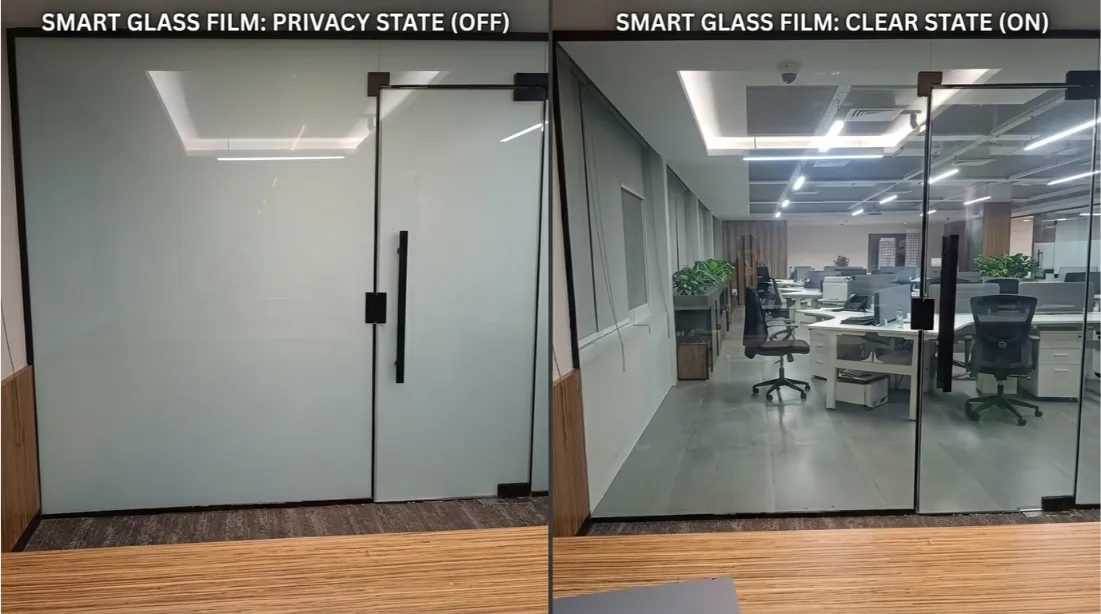
Heat is the headline, but quality film earns its place in other ways too. The 99% UV block protects furniture, carpets, curtains and artwork from the fading that strong sun causes. Glare drops sharply, making screens and living spaces more comfortable. And if you want privacy that does not depend on shade, you can step up to switchable smart film, which turns frosted on demand while still cutting UV.
Written by the VissionGuard Architectural Team — we survey and install sun control and spectrally selective window film on villas and offices across Saudi Arabia. This guide reflects current film specifications and how they perform in the Kingdom's climate.
Frequently Asked Questions
What is the best window film for heat reduction at home?
The best home window film for heat reduction is a high-TSER sun control or spectrally selective film that rejects 70–85% of solar energy and blocks 99% of UV. Spectrally selective film is ideal when you want strong heat rejection without darkening the glass, while higher-grade sun control film suits the hottest, most sun-exposed windows.
Does darker window film block more heat?
Not necessarily. Shade and heat rejection are different things: a dark dyed film can reject little heat, while a lighter spectrally selective film can reject much more. The reliable measure is TSER, so compare that figure rather than how dark the film looks.
Will window film lower my cooling bills?
Yes, in most cases. By rejecting a large share of solar heat at the glass, sun control film reduces how hard the air conditioning has to work, especially on sun-facing windows. The exact saving depends on the glass area, orientation and film grade, which a site survey can assess.
Is window film better than replacing the glass?
For most homes, film is the faster and far cheaper way to cut heat, because it is applied to your existing glass without removing the windows. Replacing glass with high-performance glazing also works but costs significantly more and is usually only worthwhile during a major renovation.
Cool Your Home This Summer
VissionGuard surveys each elevation and fits the right heat-rejection film for your villa. Book a free site survey today.
Get a Free Consultation